Cogimator – A Curated Directory of Unique Websites#
Cogimator.net is a carefully curated directory of websites that offer something more than just sleek design or trending buzz. It’s a collection of digital places created with passion — independent projects, experiments, and archives that challenge how we experience the web.
We don’t chase popularity. Instead, Cogimator focuses on originality, usefulness, creativity, and cognitive depth. You’ll find websites that are often overlooked by mainstream platforms — projects made by individuals, small teams, or devoted communities.
In short, it’s a curated directory of unique websites — assembled by hand, driven by curiosity.
We feature:
educational tools and visual simulations
cultural curiosities and digital micro-archives
experimental interfaces and interactive essays
artistic expressions and personal knowledge libraries
web-native projects that defy classification
Our mission is to:
support independent creators and timeless ideas
promote alternative knowledge sources
encourage slow exploration and digital curiosity
Most featured sites are:
non-commercial or ad-free
niche but high quality
thoughtfully crafted and often hand-coded
alive for years, yet virtually invisible to the average user
We believe in an internet that surprises, teaches, and inspires — a web that resists homogenization. If you’re tired of algorithms, top-10 lists, and over-optimized content, you’re in the right place.
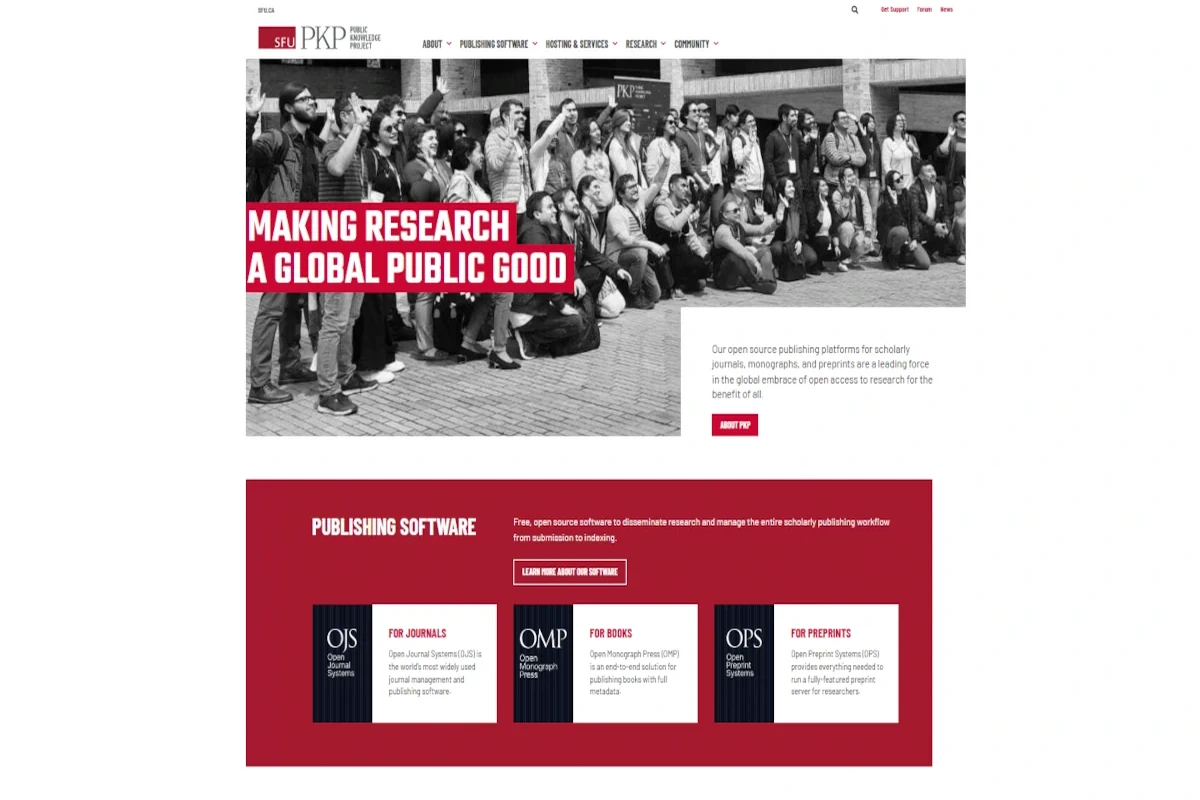
Public Knowledge Project – open software for science
Public Knowledge Project (PKP) is an international academic initiative aimed at advancing open access to scholarly knowledge. Founded at the University of British Columbia, the project is now supported by multiple partner institutions. Its flagship achievement is Open Journal Systems (OJS) – open-source software used by thousands of journals worldwide to manage peer review and publish research articles online.
PKP also develops other tools, such as Open Monograph Press and Open Preprint Systems, supporting digital distribution of books and preprints. Together, they form an ecosystem that covers the entire publishing workflow: from submission, through peer review, to making content accessible to readers.
...
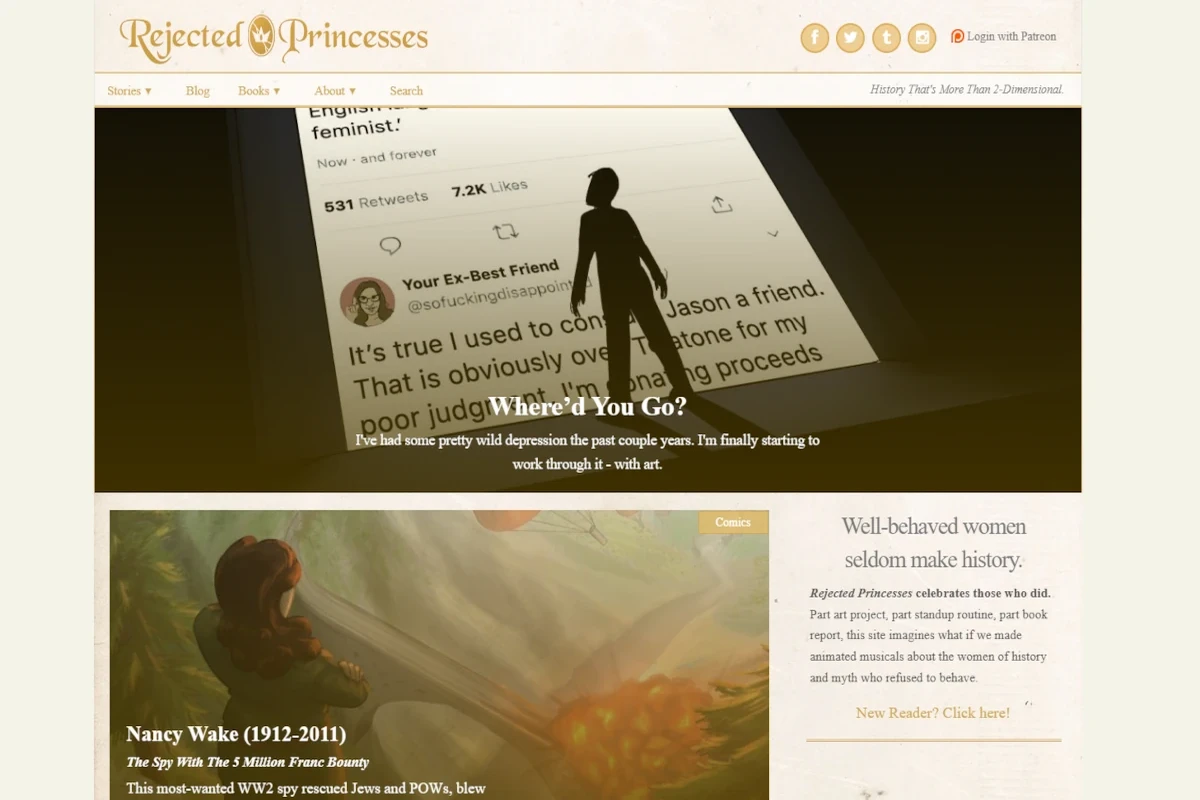
Rejected Princesses – rebellious heroines of history
Rejected Princesses is the brainchild of Jason Porath, blending illustration with history and pop culture. The idea was to create an alternate universe of princesses – not the ones we see in Disney movies, but those who would have been rejected for being “too controversial, dangerous, or politically incorrect.”
The site features hundreds of illustrated stories about women from different eras and cultures: warriors, leaders, explorers, and rebels who played significant roles in history yet were often erased from it. Each character is brought to life through bold, comic-style artwork accompanied by well-researched and engaging essays filled with facts, anecdotes, and historical context.
...
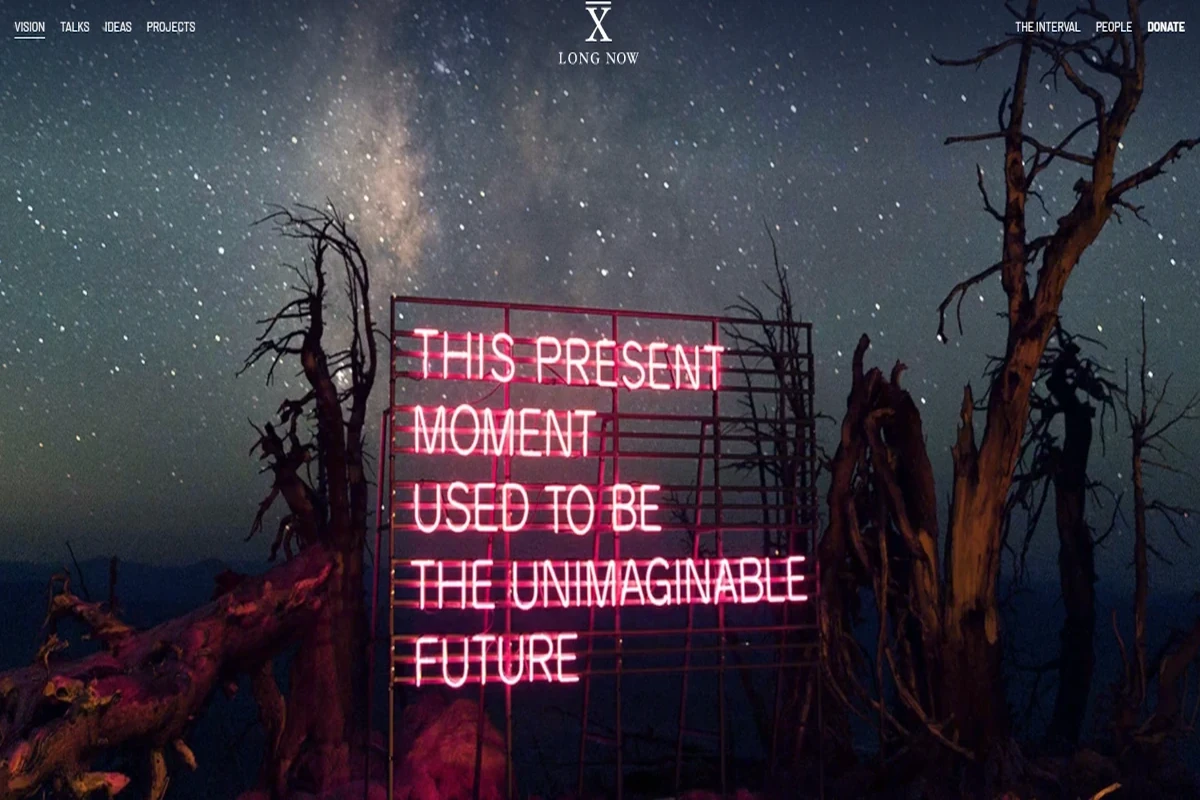
Long Now Foundation – thinking in the scale of 10,000 years
🔗 Long Now Foundation is a remarkable organization that promotes long-term thinking – not in years or decades, but in spans of 10,000 years. Founded in the 1990s by Stewart Brand, Danny Hillis, and Brian Eno, it serves as a hub and archive for projects that explore humanity’s role in deep time.
The foundation’s best-known projects include:
The Clock of the Long Now – a monumental timepiece designed to keep time for 10,000 years, The Rosetta Project – a digital and physical archive of the world’s languages, preserving linguistic diversity for future generations, Seminars About Long-term Thinking (SALT) – an ongoing lecture and discussion series, started in 2003, featuring leading thinkers and made available online. The core idea is that our cultural, technological, and ecological decisions should be guided by consideration of the distant future. The website functions as a repository of ideas and practical projects, covering art, science, philosophy, ecology, history, and speculative futures.
...
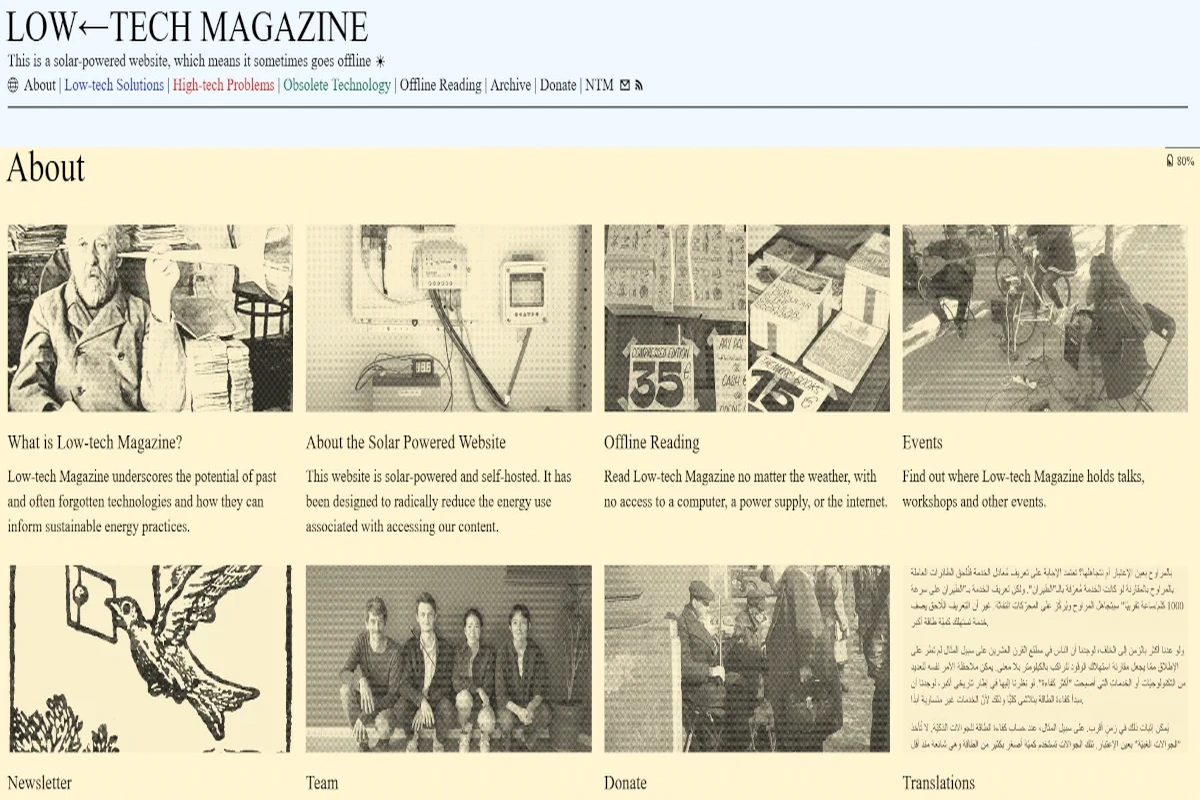
Solar Low-Tech Magazine – a solar-powered low-energy website
🔗 Solar Low-Tech Magazine is a unique project where the website itself is not just a container of content but an experiment in its own right. It is powered entirely by solar energy – hosted on a computer connected to PV panels – and its availability depends on weather conditions and battery charge. Visiting the site means literally browsing the internet powered by renewable energy.
The creators embraced minimalism and efficiency. The site is free from ads, trackers, and unnecessary scripts. Instead of heavy images, it uses dithering-compressed graphics, while the color palette is deliberately limited. The result is a remarkably lightweight website that loads quickly even on low-end devices, while maintaining a distinctive visual identity.
...
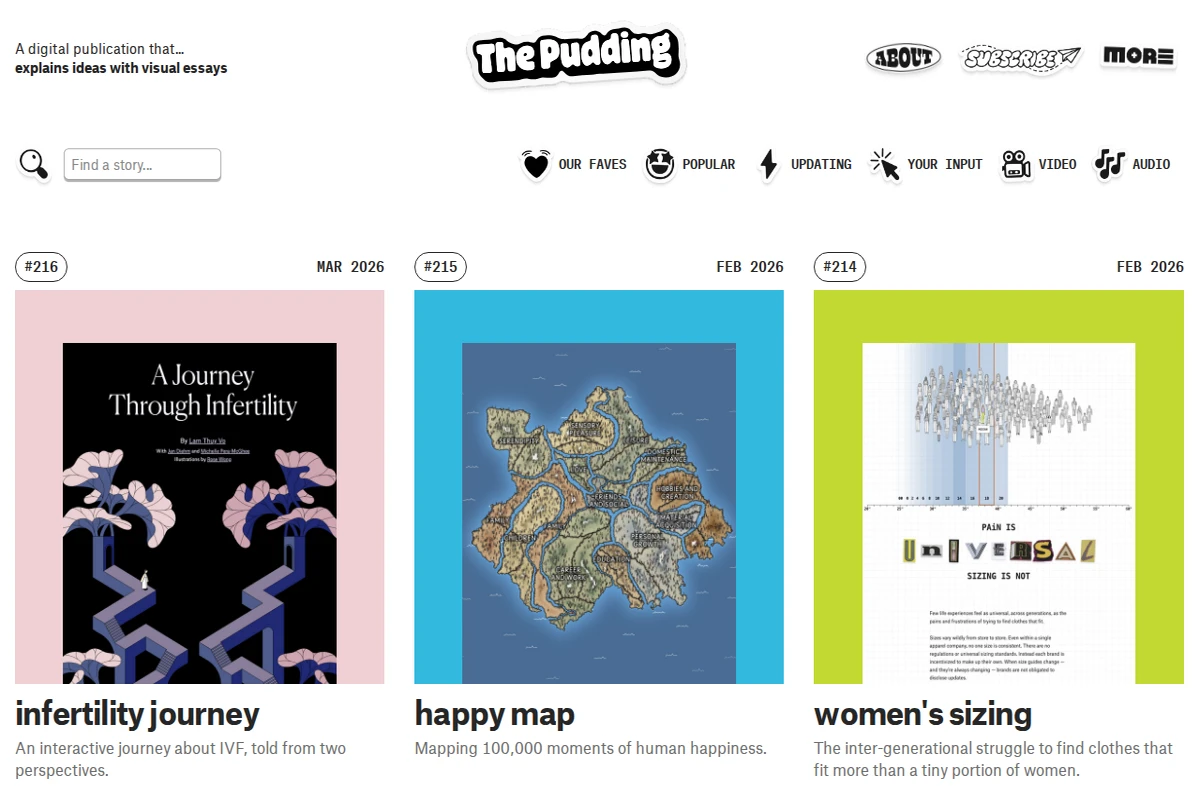
🔗 The Pudding is an independent digital publication that explains complex ideas through visual essays. Instead of traditional articles, the team creates interactive narratives where data, charts, and animations form the backbone of storytelling.
Each essay is a standalone project, combining research, design, and coding. The topics range from culture and science to technology and everyday life – exploring language trends, music, film, and social media. In every case, data is the starting point for building an engaging visual story.
...
arXiv – open repository of scientific publications
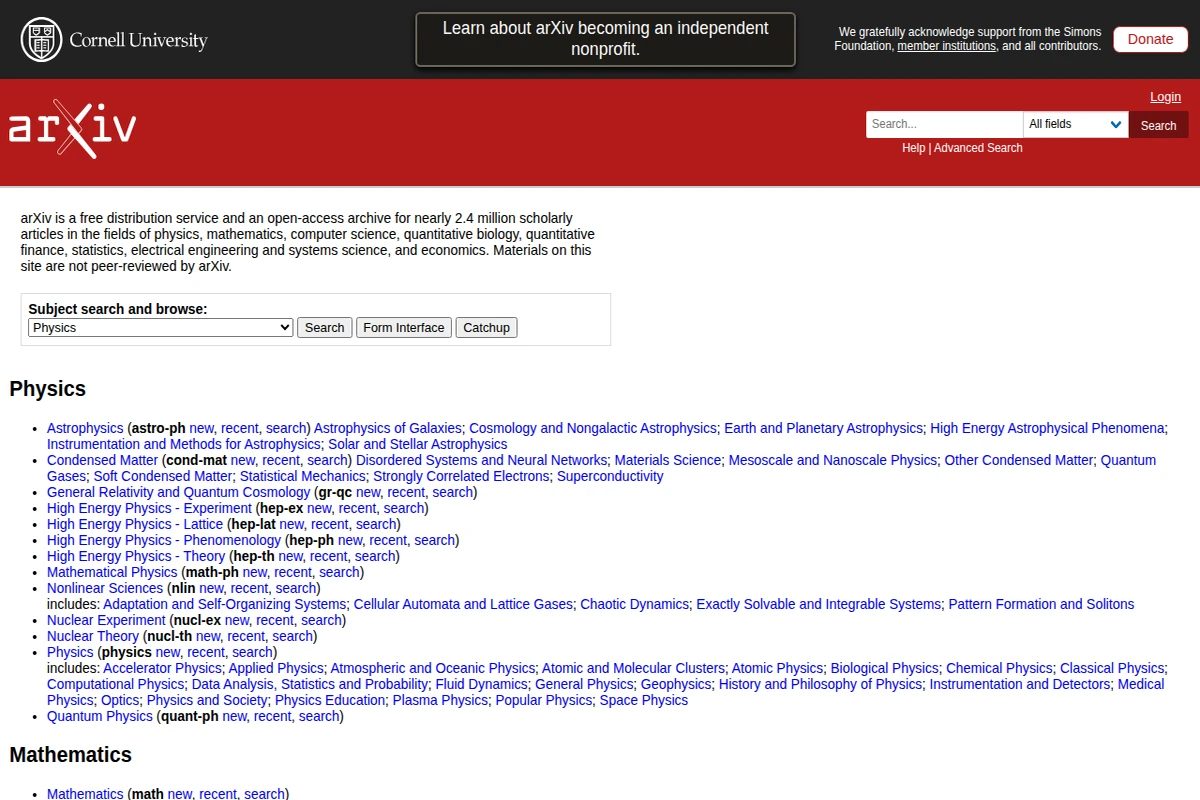
🔗 arXiv.org is one of the most important open scientific repositories in the world. Founded in 1991 by physicist Paul Ginsparg, it has become a key platform for scientific preprints – early versions of research papers shared before formal peer review in journals.
arXiv covers a wide range of fields: physics, mathematics, computer science, natural sciences, economics, statistics, and even social sciences. Hundreds of new papers are added every day, making it one of the most dynamic sources of scientific knowledge online.
...
Hackaday – DIY projects and engineering experiments
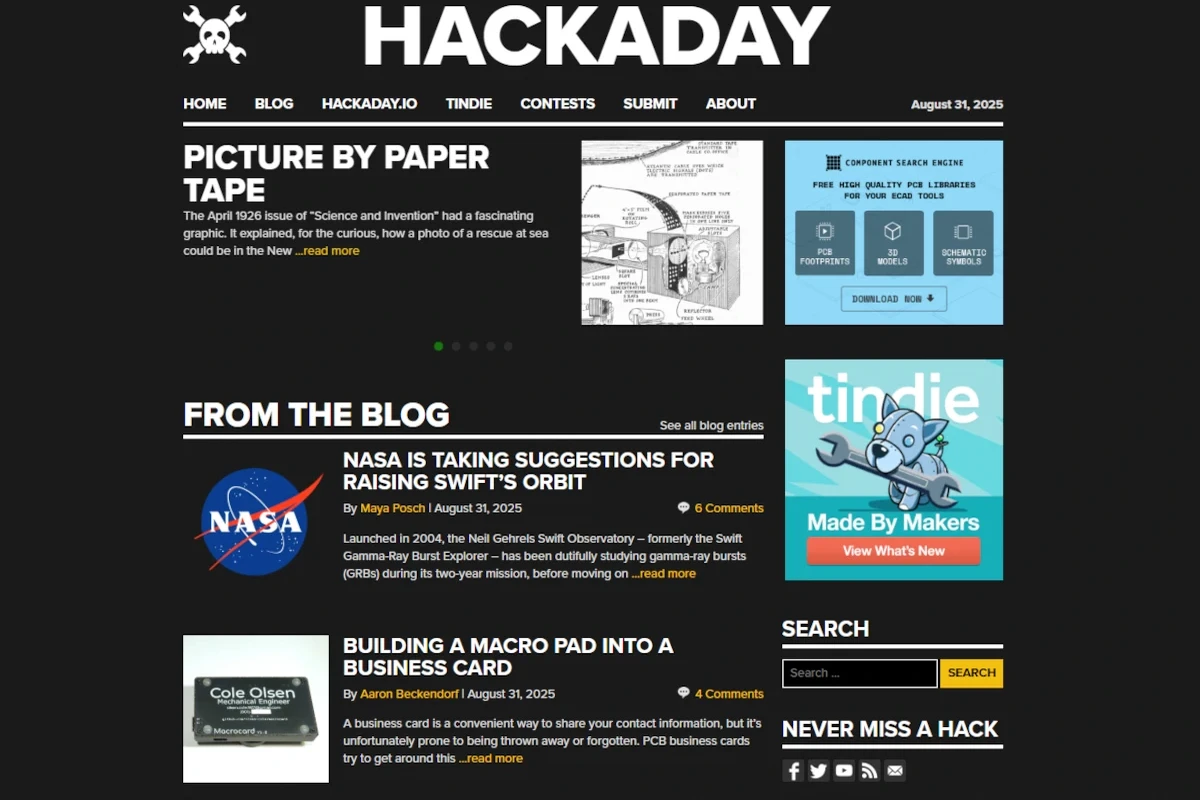
🔗 Hackaday.com is one of the most fascinating and longest-running online communities dedicated to DIY projects, electronics, hardware hacking, and experimental inventions. Every day, new articles showcase projects from around the world – from simple home device modifications to advanced robots and unique musical instruments.
Hackaday serves as a hub where engineers, hardware hackers, makers, and electronics enthusiasts share their ideas, schematics, and source code. The platform attracts both professionals and amateurs, inspiring them to create and experiment.
...
Monoskop – encyclopedia of media art and digital culture
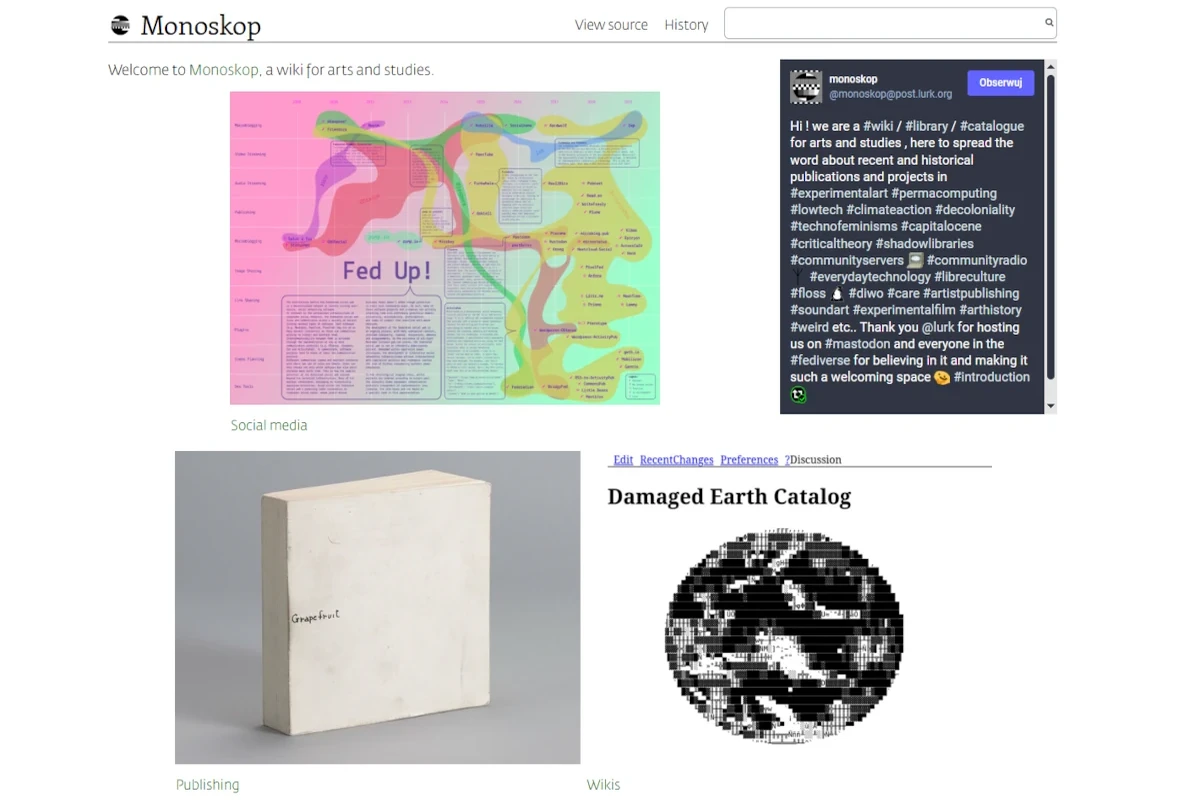
🔗 Monoskop.org is a unique project that blends the qualities of an encyclopedia, a digital library, and a knowledge repository. Developed for more than a decade by a community of researchers, artists, and enthusiasts, it focuses on media art, digital culture, philosophy, aesthetics, and critical theory, offering materials rarely found in conventional sources.
What makes Monoskop stand out is its vast archives – hundreds of scanned books, essays, and publications, often otherwise hard to access. The wiki structure allows seamless expansion of entries and cross-linking between related topics, while the project’s openness fosters collaboration and continuous updates.
...
99% Invisible – hidden stories of design, architecture, and material culture
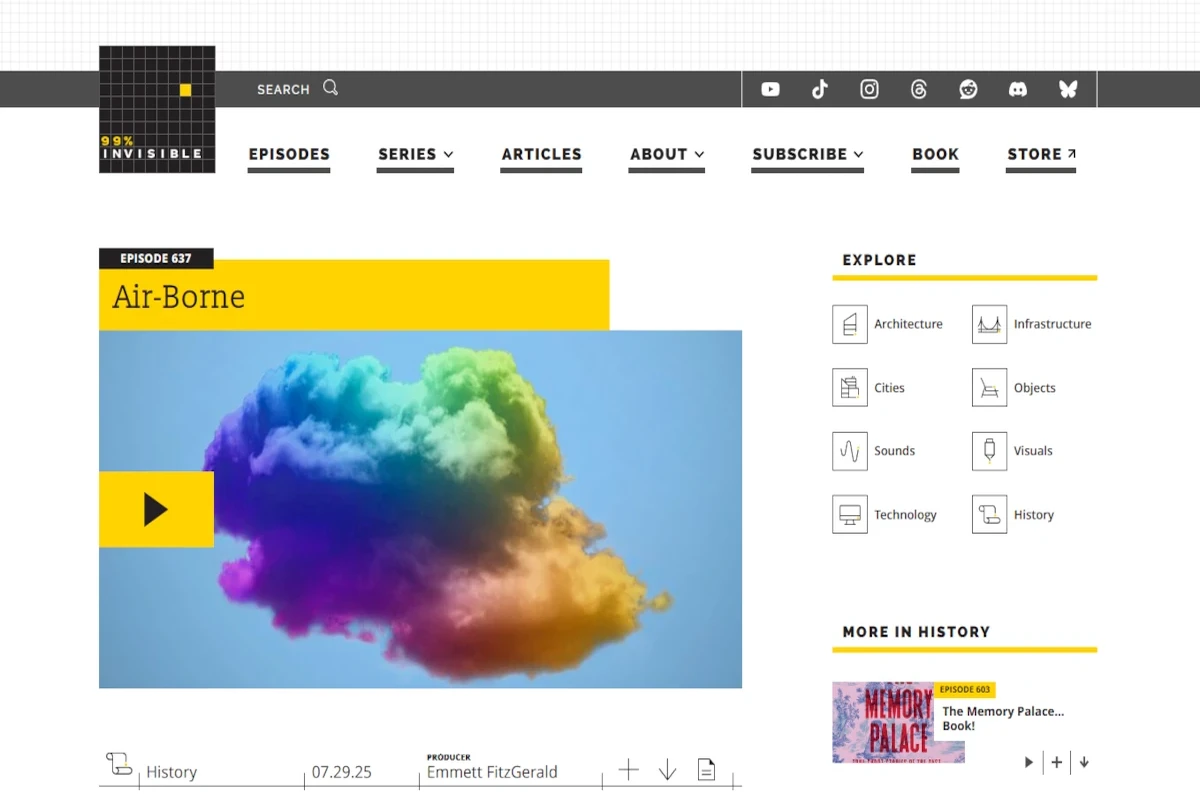
🔗 99% Invisible is a project that, since 2010, has explored the unseen aspects of design, architecture, engineering, and material culture. Originally launched as a podcast by Roman Mars, it has since grown into a full-fledged website featuring articles, photographs, audio recordings, and videos.
Each episode and article tells the story of seemingly ordinary elements of our surroundings – from the shape of road signs, to the construction of bridges and buildings, to the hidden meanings behind patterns and urban systems. These are narratives about the subtle forces that shape our lives, often unnoticed, yet profoundly impactful.
...
Atlas Obscura – a guide to extraordinary places and cultures
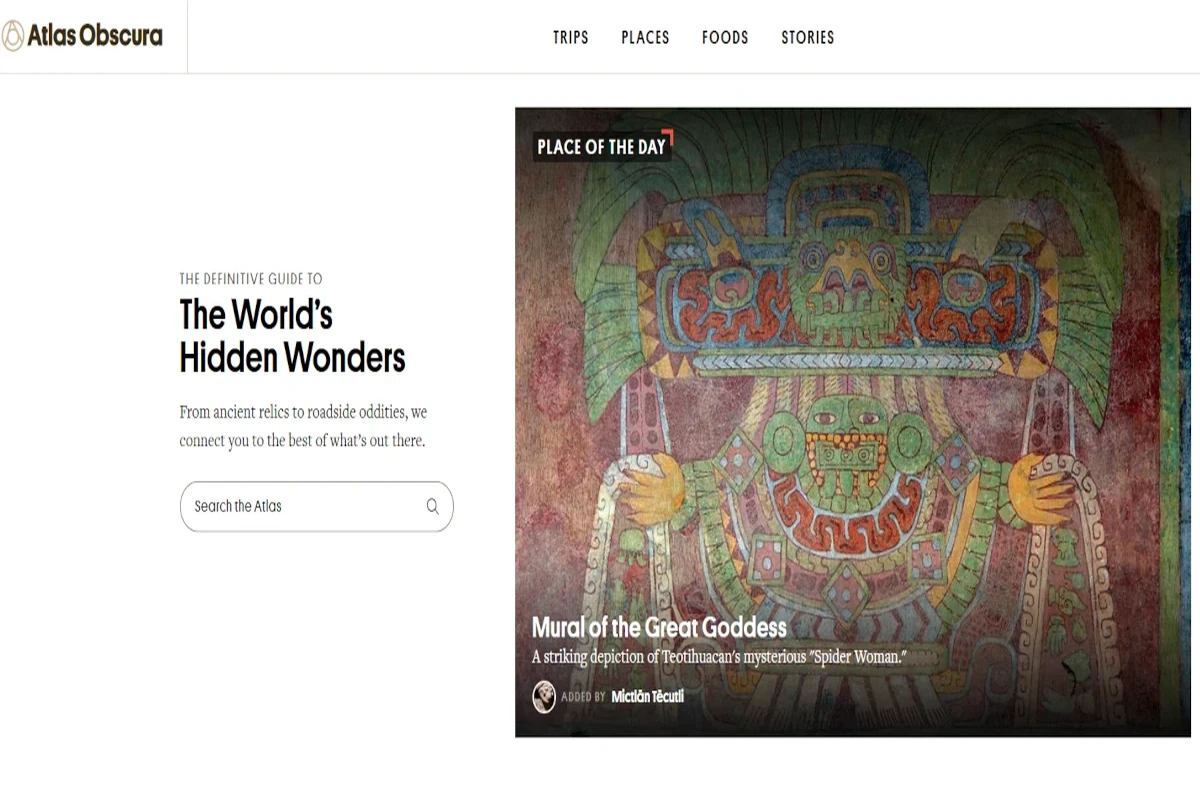
🔗 Atlas Obscura is a unique guide to extraordinary places, cultures, and phenomena from around the globe. Founded in 2009 by travel enthusiasts, it was created to build a knowledge base of places and stories overlooked by traditional travel guides. Today, the site contains thousands of entries contributed by travelers, historians, researchers, and enthusiasts.
The platform features an interactive map that allows users to explore geographical and cultural curiosities anywhere in the world. Descriptions cover natural phenomena – such as unique geological formations and rare plant species – as well as man-made wonders, including forgotten buildings, abandoned sites, quirky museums, and unusual art installations.
...