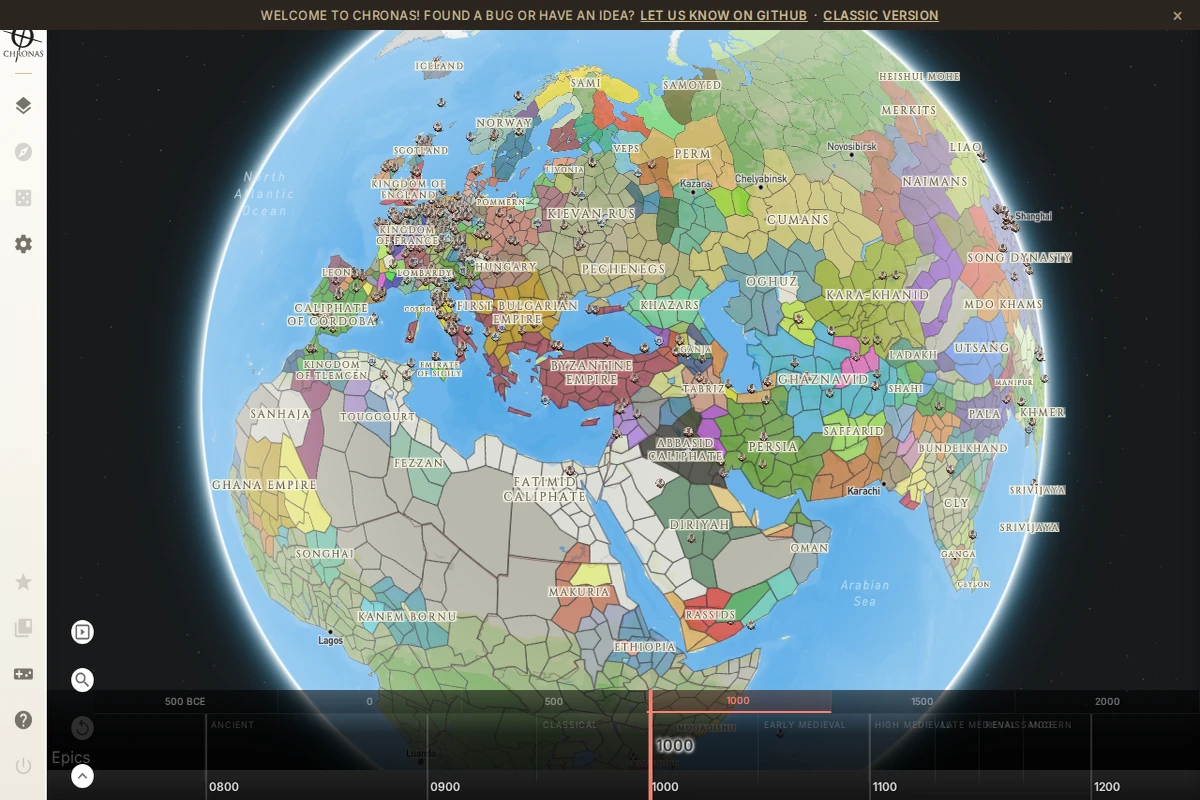
An interactive 3D globe displaying world political borders circa 1000 AD, with empires like the Byzantine Empire, Abbasid Caliphate, and Kievan Rus color-coded across continents, with a timeline scrubber at the bottom.

chronas.org

Chronas – Interactive Historical World Map

Chronas is one of those rare projects that makes you lose track of time — quite literally. It presents the entire political history of the world as a navigable 3D globe, spanning from 500 BCE all the way to the modern era. A timeline bar runs along the bottom of the screen, divided into eras from Ancient through Classical, Medieval, Renaissance, and Modern — and sliding it transforms the map in real time, redrawing borders, renaming territories, and reshuffling the colors of hundreds of polities simultaneously.\n\nAt the year 1000 AD, for instance, the map bursts with the Byzantine Empire, the Abbasid Caliphate, the Kievan Rus, the Song Dynasty, and dozens of smaller kingdoms and tribal confederacies — each rendered with its own colored region and label. The level of historical granularity is genuinely impressive, covering not just the major empires that dominate textbooks but also smaller entities like the Pechenegs, the Ghaznavids, the Srivijaya, or the Kanem-Bornu. It’s the kind of map that rewards curiosity and punishes impatience in the best possible way.\n\nThe project is open-source, with active development tracked on GitHub, and it invites community contributions for bug reports and new ideas. A “Classic Version” is also available for those who prefer the earlier interface. The community-driven nature of Chronas means its historical data continues to grow and be refined over time, making it both a tool and a living collaborative archive.\n\nFor students, history enthusiasts, game designers, or anyone who has ever wondered what the world looked like when the Vikings were raiding and the Tang Dynasty was flourishing, Chronas offers an endlessly explorable answer — rendered beautifully, at your own pace.\n\n🔗 chronas.org ...

July 18, 2026 · Cogimator Team
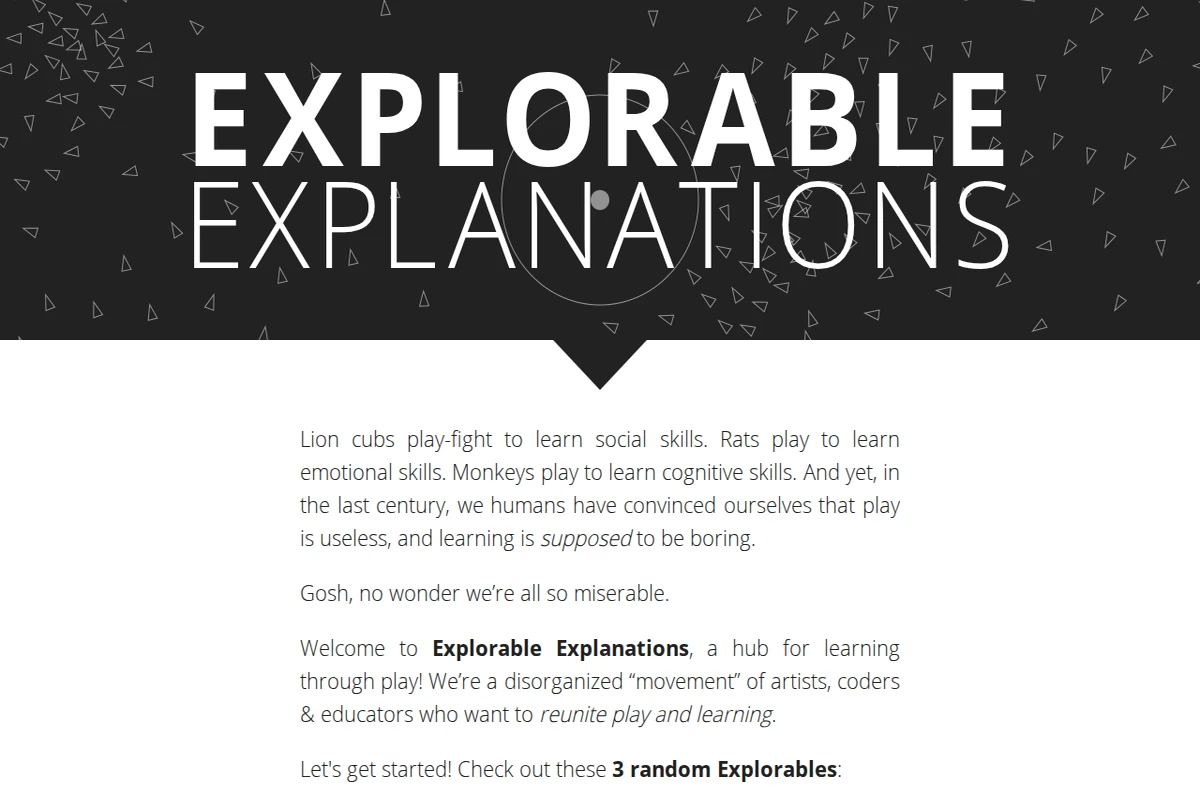
The bold black-and-white homepage of Explorable Explanations, featuring large typographic lettering and scattered triangle shapes.

explorabl.es

Explorable Explanations – Learn by Playing

What if learning felt less like a lecture and more like play? That’s the animating question behind Explorable Explanations, a community-built hub that collects interactive essays, simulations, and toys spanning an impressive range of subjects — mathematics, physics, biology, journalism, philosophy, and more. The site opens with a disarming manifesto: lion cubs play-fight to learn social skills, rats play to acquire emotional ones, monkeys learn cognition through play — and yet humans have somehow convinced themselves that learning is supposed to be boring. The point lands.\n\nThe “explorables” themselves are the real draw. Rather than static text or passive video, each piece invites you to drag sliders, poke simulations, and observe systems changing in real time. A tutorial on trigonometry teaches by letting you aim a homing rocket. A piece on 4D geometry hands you an actual toy for “4D children.” The format, pioneered by thinkers like Bret Victor, turns explanation into a genuine dialogue between reader and idea.\n\nThe site is deliberately described as a “disorganized movement” — a loose collective of artists, coders, and educators rather than a polished institution. That roughness is part of its charm. You can browse by subject, hit a button for three random explorables, or simply view everything on a single sprawling page. The source code is open (“open sauce,” as they put it), and the community extends onto Reddit and social media for those who want to contribute their own interactive work.\n\nFor anyone who has ever felt that a diagram would be better if you could touch it, or that an equation might click if you could just play with it, Explorable Explanations is an essential bookmark. It is simultaneously a gallery, a toolkit, and a quiet argument for a better way of teaching.\n\n🔗 explorabl.es ...

July 18, 2026 · Cogimator Team
A child using a laptop in a classroom with PhET interactive science simulations visible on screen.

phet.colorado.edu/pl

PhET Interactive Simulations – Free Science & Math Sims

PhET Interactive Simulations is one of the most ambitious and genuinely impactful educational projects on the web. Born in 2002 at the University of Colorado Boulder under the guidance of Nobel Prize-winning physicist Carl Wieman, it set out to answer a deceptively simple question: what if students could play their way into understanding science? Two decades and 1.8 billion simulation runs later, the answer is resoundingly yes.\n\nThe library spans 173 simulations across physics, mathematics and statistics, chemistry, earth science, and biology — all free, all browser-based, and available in 132 languages. Each simulation is built on a foundation of rigorous education research, designed so that learners discover principles through hands-on experimentation rather than passive reading. You can drag electrons around a circuit, watch probability distributions emerge in real time, or manipulate molecules and immediately see how intermolecular forces change. The interface feels closer to a well-designed game than a textbook exercise.\n\nFor educators, PhET goes well beyond just providing tools. The platform hosts over 3,600 teacher-contributed lesson plans, simulation-specific teaching guides, introductory videos, and professional development workshops. A dedicated Studio tier even allows teachers to create customised versions of simulations tailored to specific classroom needs — a rare and thoughtful addition.\n\nWhat makes PhET stand out among educational platforms is its commitment to inclusive design and accessibility. The team actively works on making simulations usable with screen readers and assistive technologies, and the project has a dedicated initiative around diversity, equity, inclusion, and belonging in STEM education. The source code is open, translations are community-driven, and offline access is supported — making PhET genuinely global in reach, not just in aspiration.\n\n🔗 phet.colorado.edu ...

July 18, 2026 · Cogimator Team
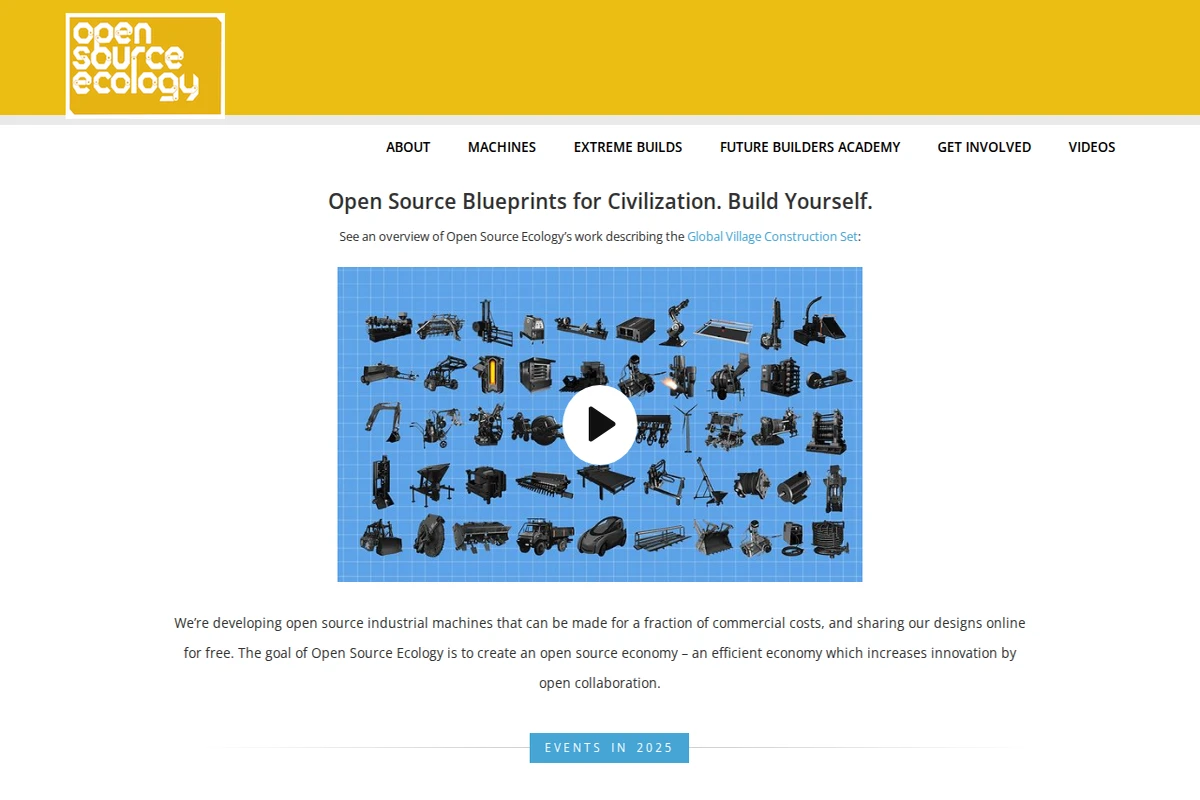
A grid of 50 industrial machines illustrated as technical drawings on a blue background, showing the complete Global Village Construction Set from Open Source Ecology.

opensourceecology.org

Open Source Ecology - Blueprints for Civilization

Open Source Ecology represents one of the most ambitious attempts to reimagine how we build our civilization. This Missouri-based organization is developing open source blueprints for 50 essential industrial machines that form the Global Village Construction Set — everything from tractors and 3D printers to wind turbines and brick presses. Their radical premise is simple: these machines can be built for a fraction of commercial costs when the designs are shared freely. ...

March 27, 2026 · Cogimator Team
Screenshot of PKP's homepage showing their mission to make research a global public good with open source publishing platforms.

pkp.sfu.ca

Public Knowledge Project - Open Source Academic Publishing

The Public Knowledge Project represents one of the most significant contributions to democratizing scholarly publishing in the digital age. This research and development initiative from Simon Fraser University has created an entire ecosystem of open source publishing platforms that power over 50,000 journals worldwide, making it a cornerstone of the global open access movement. At the heart of PKP’s offerings are three powerful platforms: Open Journal Systems (OJS), the world’s most widely used journal management software; Open Monograph Press (OMP) for book publishing; and Open Preprint Systems (OPS) for preprint servers. What sets PKP apart is not just the robustness of their free software, but their comprehensive approach that includes hosting services, training, and ongoing research into scholarly communication practices. ...

March 27, 2026 · Cogimator Team
Sci-Hub homepage showing a search interface and live feed of recently accessed scientific papers.

sci-hub.in

Sci-Hub - Free Scientific Research Database

Sci-Hub stands as perhaps the most polarizing project in modern academia — a digital Robin Hood that has fundamentally challenged how scientific knowledge is distributed. Created by Alexandra Elbakyan in 2011, this platform has amassed millions of research papers, breaking through the paywalls that traditionally restrict access to scientific literature. The site operates with a simple yet revolutionary premise: all scientific knowledge should be freely accessible to anyone, anywhere. Students in developing countries, independent researchers, medical professionals, and curious individuals who cannot afford expensive journal subscriptions can access cutting-edge research with a single click. The platform’s real-time feed shows the constant stream of papers being accessed, from comparative transcriptome analysis to advances in social psychology. ...

March 22, 2026 · Cogimator Team
Screenshot of the Public Knowledge Project website – open software for science

publicknowledgeproject.org

Public Knowledge Project – open software for science

Public Knowledge Project (PKP) is an international academic initiative aimed at advancing open access to scholarly knowledge. Founded at the University of British Columbia, the project is now supported by multiple partner institutions. Its flagship achievement is Open Journal Systems (OJS) – open-source software used by thousands of journals worldwide to manage peer review and publish research articles online. PKP also develops other tools, such as Open Monograph Press and Open Preprint Systems, supporting digital distribution of books and preprints. Together, they form an ecosystem that covers the entire publishing workflow: from submission, through peer review, to making content accessible to readers. ...

September 2, 2025 · Cogimator Team
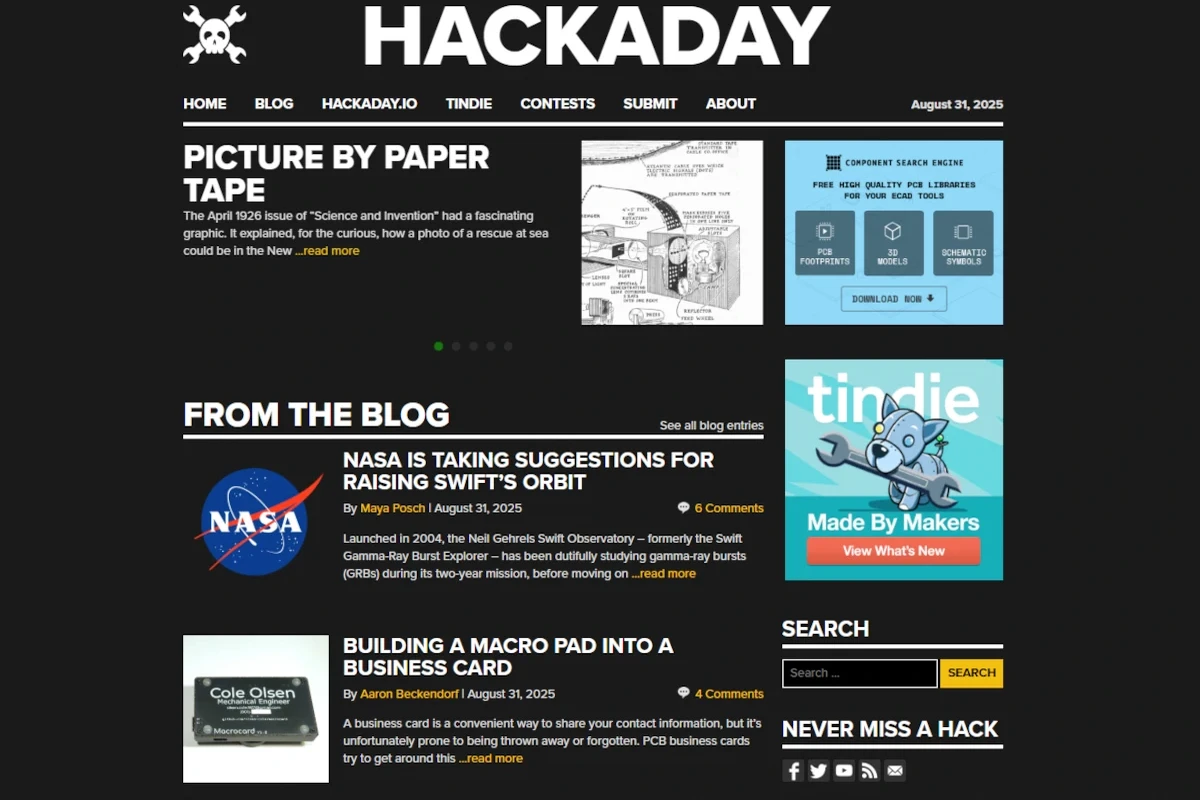
Hackaday homepage – DIY projects and hardware hacks

hackaday.com

Hackaday – DIY projects and engineering experiments

🔗 Hackaday.com is one of the most fascinating and longest-running online communities dedicated to DIY projects, electronics, hardware hacking, and experimental inventions. Every day, new articles showcase projects from around the world – from simple home device modifications to advanced robots and unique musical instruments. Hackaday serves as a hub where engineers, hardware hackers, makers, and electronics enthusiasts share their ideas, schematics, and source code. The platform attracts both professionals and amateurs, inspiring them to create and experiment. ...

August 31, 2025 · Cogimator Team
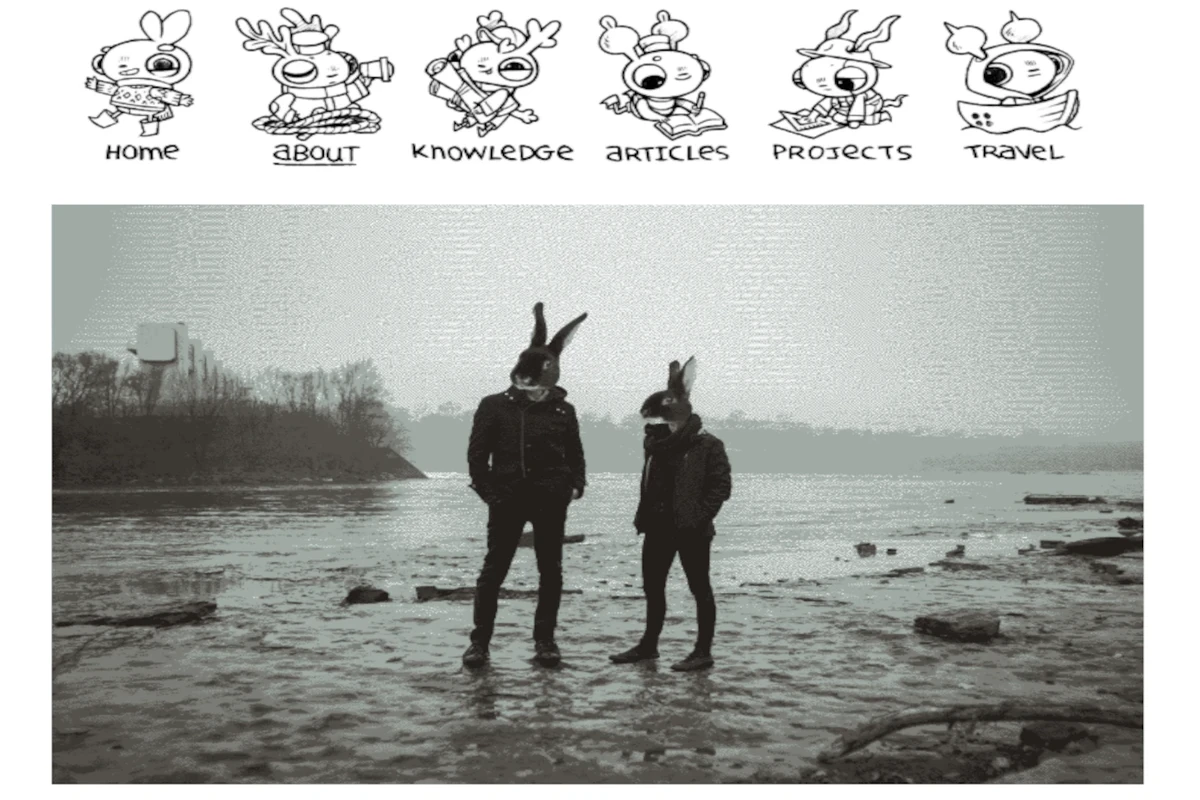
Screenshot of the 100r.co homepage

100r.co

Hundred Rabbits – Creating and Living Outside the Mainstream

🔗 100r.co Hundred Rabbits (100r) is a radically unique digital project – an independent studio run by Rekka Bellum and Devine Lu Linvega, who live and work aboard a sailboat on the Pacific Ocean. Powered by solar panels and fueled by curiosity, they build tools, write essays, and publish reflections outside the gravitational pull of the tech industry. Their website is a living archive of life off the grid – equal parts travelogue, laboratory, sketchbook, and philosophy zine. Highlights include: ...

August 1, 2025 · Cogimator Team
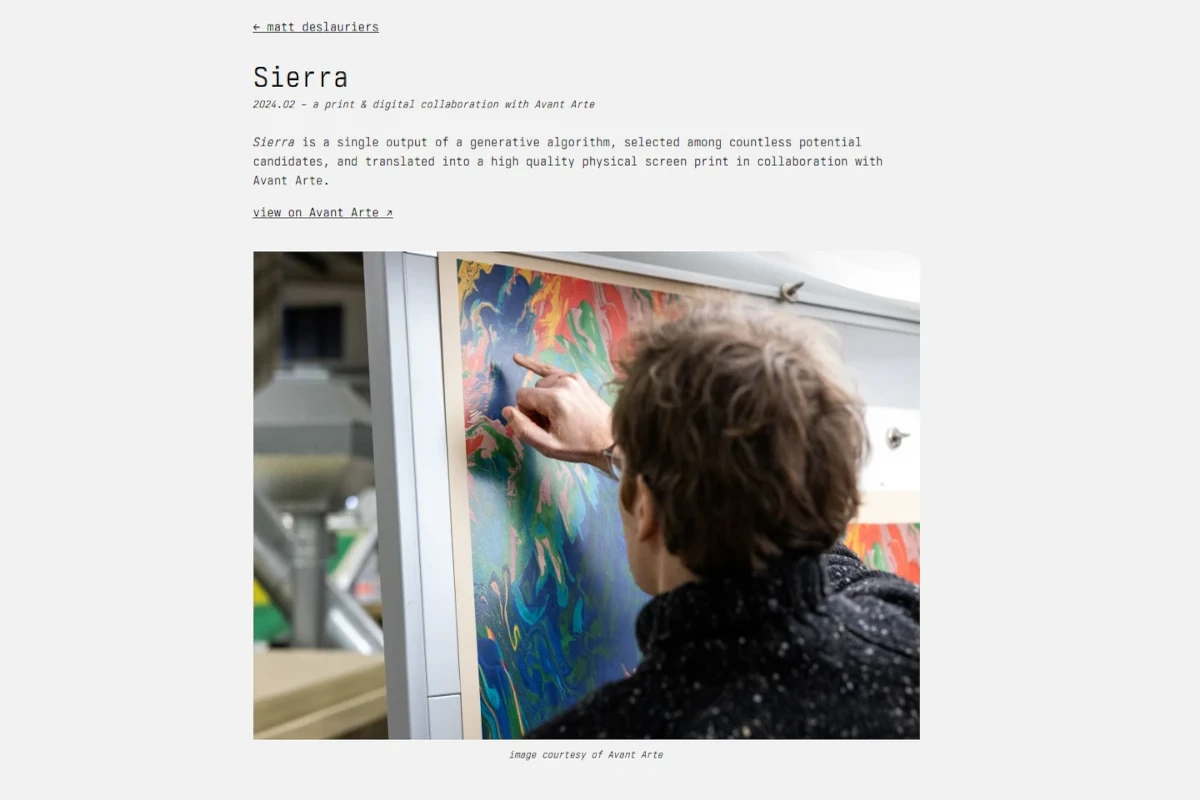
Screenshot of the homepage of mattdesl.com

mattdesl.com

Matt DesLauriers – Code as Material, Art as Algorithm

🔗 mattdesl.com Matt DesLauriers’ website is a unique fusion of generative art, computer graphics, and low-level programming. Based in London, DesLauriers is both an artist and a developer, exploring the beauty of code through visual, interactive compositions powered by WebGL, GLSL, and JavaScript. His site offers a rich gallery of browser-based visual experiments, showcasing real-time rendering techniques and shader-driven artworks. Each piece strikes a balance between mathematical abstraction and aesthetic intuition – whether it’s particle simulations, dynamic light effects, or procedurally drawn forms. ...

August 1, 2025 · Cogimator Team