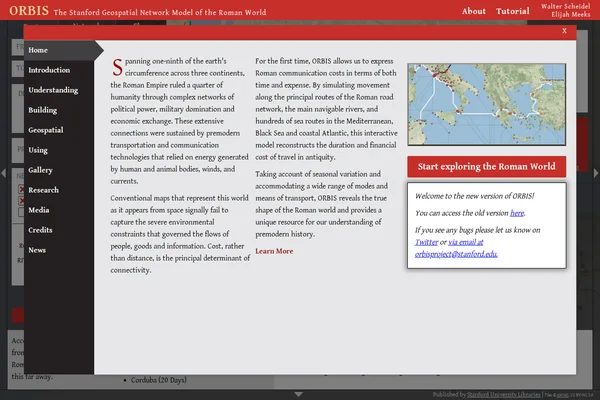
Screenshot of ORBIS interface showing an interactive map of the Roman Empire with transport routes and travel time calculations between cities.

orbis.stanford.edu

ORBIS: Stanford's Roman World Transport Model

ORBIS represents a groundbreaking achievement in digital historical scholarship, transforming our understanding of connectivity in the ancient world. Developed by Stanford University, this sophisticated geospatial network model reconstructs the true shape of the Roman Empire not as it appears on conventional maps, but as it was experienced by people living within its vast boundaries. The project’s fundamental insight is revolutionary: in the premodern world, cost rather than distance determined connectivity. By simulating movement along the extensive Roman road network, major navigable rivers, and hundreds of Mediterranean, Black Sea, and coastal Atlantic routes, ORBIS reveals how geography, technology, and seasonal variations shaped the flow of people, goods, and information across three continents. The model accounts for different modes of transport from oxcarts to horse relays, incorporating realistic travel speeds and costs. ...

March 23, 2026 · Cogimator Team
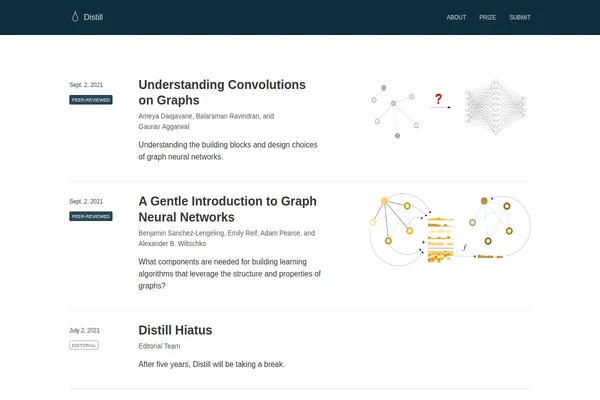
Homepage of Distill showing a list of peer-reviewed articles about machine learning with publication dates and author names.

distill.pub

Distill: Visual and Interactive Machine Learning Articles

Distill established itself as a unique voice in machine learning publishing, focusing on clarity and understanding rather than just novel results. The journal made complex AI concepts accessible through innovative interactive visualizations, comprehensive explanations, and rigorous peer review. The site showcases articles that go beyond traditional academic papers, featuring deep dives into topics like graph neural networks, convolutional architectures, and Bayesian optimization. Each piece combines theoretical rigor with practical insights, often including interactive elements that let readers explore concepts hands-on. Contributors include researchers from leading institutions and companies, ensuring both academic depth and real-world relevance. ...

March 22, 2026 · Cogimator Team
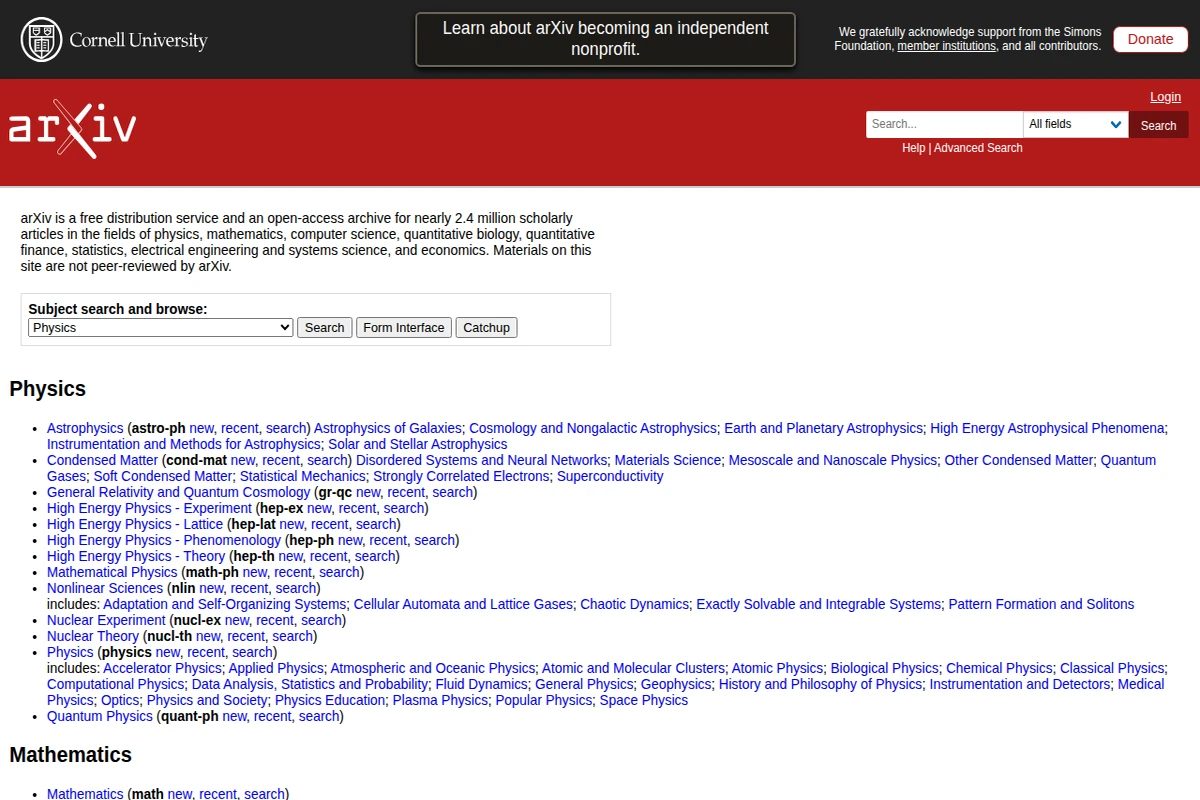
arXiv homepage – open repository of scientific preprints

arxiv.org

arXiv – open repository of scientific publications

🔗 arXiv.org is one of the most important open scientific repositories in the world. Founded in 1991 by physicist Paul Ginsparg, it has become a key platform for scientific preprints – early versions of research papers shared before formal peer review in journals. arXiv covers a wide range of fields: physics, mathematics, computer science, natural sciences, economics, statistics, and even social sciences. Hundreds of new papers are added every day, making it one of the most dynamic sources of scientific knowledge online. ...

August 31, 2025 · Cogimator Team
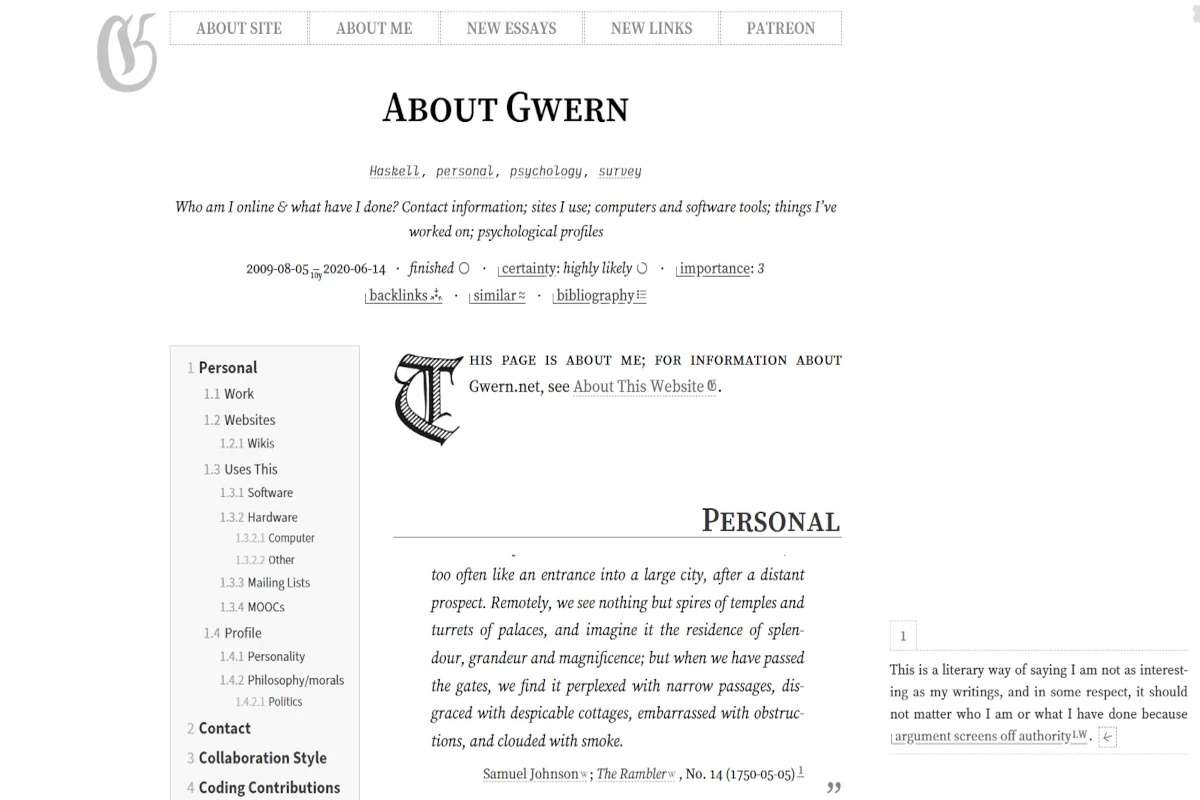
Screenshot of the Gwern.net website

www.gwern.net

Gwern.net – a personal encyclopedia of research and speculation

Gwern.net is a personal, long-running research site by Gwern Branwen, an independent writer and self-taught researcher. The website gathers a vast collection of long-form essays, scientific explorations, experiments, and data analyses — spanning cognitive psychology, artificial intelligence, Bayesian inference, nootropics, digital preservation, literature generation, and more. Since 2010, Gwern has been publishing rigorously documented articles, often including full datasets, code (typically in Python or R), and interactive elements. The tone is scholarly but accessible, blending speculative ideas with solid methodology. Many entries are live documents, continuously updated as new research emerges. ...

July 26, 2025 · Cogimator Team